
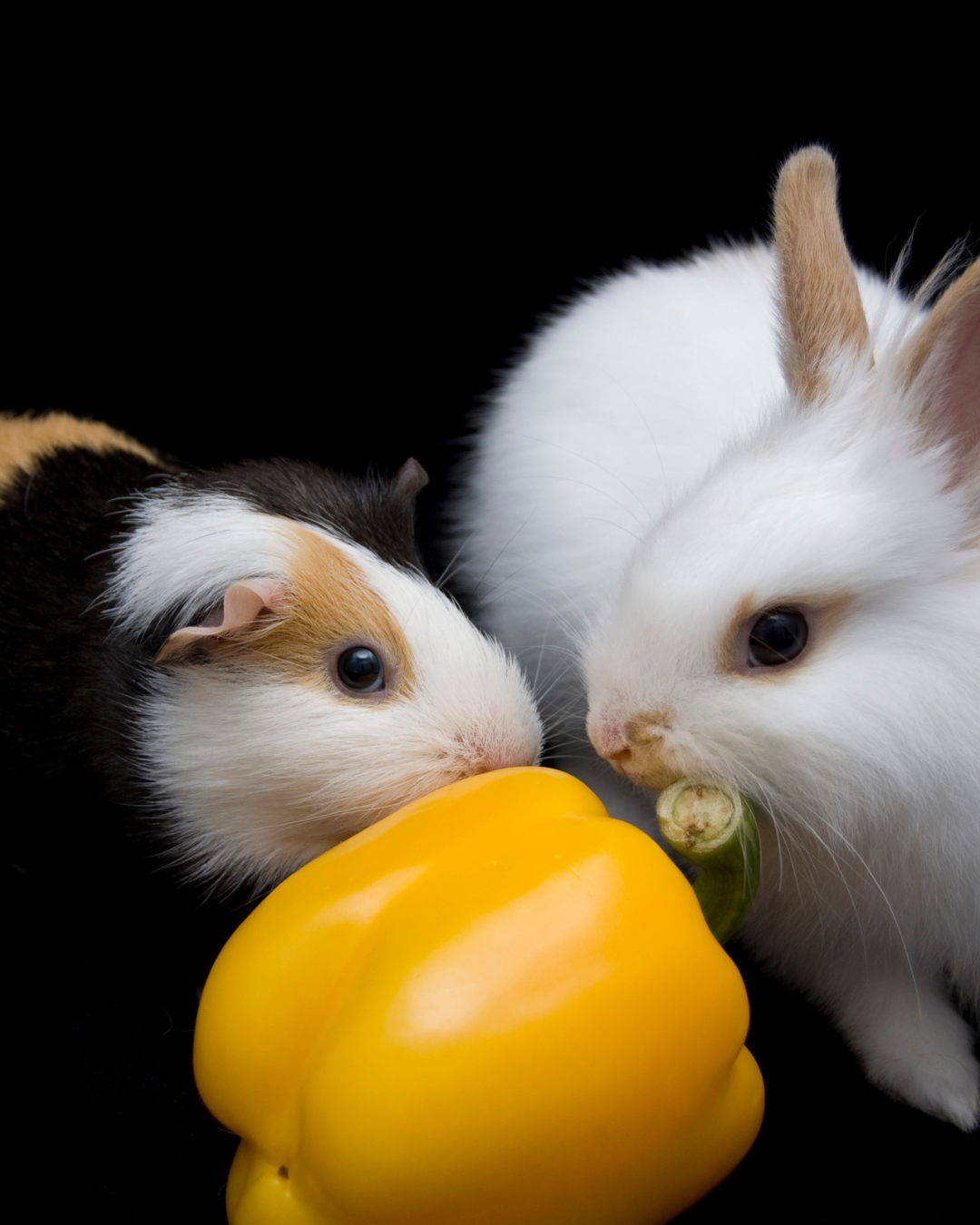
What Should I Feed My Rabbit or Guinea Pig? A Guide to a Healthy Diet
Rabbits and guinea pigs may be small, but their nutritional needs deserve plenty of attention. The right diet plays an important role in keeping their digestive systems working properly, maintaining healthy teeth, and supporting their overall health.
While rabbits and guinea pigs have some different nutritional requirements, both benefit from a diet centered around one particularly important ingredient: hay.
Hay Should Be the Main Event
High-quality grass hay should make up the majority of an adult rabbit or guinea pig’s diet and should be available at all times.
Timothy, orchard grass, and other grass hays provide the fiber their digestive systems need to function normally. Hay also encourages the constant chewing that helps naturally wear down their teeth.
This is particularly important because rabbit and guinea pig teeth grow continuously throughout their lives. Without enough appropriate chewing, dental problems can develop, potentially causing pain and difficulty eating.
Alfalfa hay is higher in calories and calcium than grass hay and is generally more appropriate for young, growing animals or in specific situations recommended by your veterinarian.
What About Pellets?
Pellets can provide additional nutrients, but they shouldn’t replace hay.
Choose a high-quality pellet specifically formulated for rabbits or guinea pigs. Avoid mixes containing colorful pieces, seeds, dried fruit, or other additions that may encourage selective eating.
Portion size matters too. Too many pellets can contribute to weight gain and may mean your pet fills up before eating enough hay. Your veterinarian can help you determine an appropriate amount based on your pet’s species, age, weight, and health.
Add Fresh Vegetables
Fresh vegetables can add variety, nutrients, and enrichment to your small pet’s diet.
Leafy greens are generally a good place to start. Options may include romaine lettuce, cilantro, parsley, and other rabbit- or guinea pig-safe greens. Introduce new foods gradually, particularly if your pet isn’t accustomed to eating fresh vegetables.
Wash produce thoroughly before serving it, and remove anything uneaten before it spoils.
Guinea Pigs Need Vitamin C
One important difference between rabbits and guinea pigs is that guinea pigs cannot produce their own vitamin C. They therefore need a reliable source in their daily diet.
A guinea pig-specific pellet should contain vitamin C, while appropriate fresh foods such as bell peppers can provide additional dietary sources.
Vitamin C degrades over time, particularly in stored food, so it’s important to make sure your guinea pig is consistently receiving enough. If you’re unsure whether their diet provides adequate vitamin C, talk to your veterinarian before adding a supplement.
Keep Treats as Treats
It’s hard to resist giving our pets something special, but treats should only make up a very small part of a rabbit or guinea pig’s diet.
Fruit, for example, can be high in sugar and should be offered sparingly. Commercial treats containing lots of sugar, seeds, nuts, or processed ingredients are best avoided.
Often, a small portion of a favorite safe vegetable can be just as exciting to your pet.
Foods to Avoid
Not everything we eat is safe or appropriate for rabbits and guinea pigs. Foods to avoid include chocolate, candy, dairy products, meat, onions, garlic, avocado, and highly processed human foods.
Seeds, nuts, and sugary treats are also inappropriate for their everyday diet.
If you’re ever uncertain about a particular food, check with your veterinary team before offering it.
Diet, Digestion, and Dental Health Are Closely Connected
A healthy diet does much more than provide calories and nutrients. Rabbits and guinea pigs have specialized digestive systems that depend on a steady intake of fiber. Sudden dietary changes or not eating enough can quickly become a serious concern.
Diet also plays an essential role in dental health. Plenty of hay encourages the natural chewing behavior necessary to help wear down continuously growing teeth.
Pay attention to changes in your pet’s eating habits. Refusing hay, eating less, dropping food, losing weight, or producing fewer droppings can all indicate a health problem and should not be ignored.
A Healthy Diet Starts With the Individual Pet
Although there are general guidelines for feeding rabbits and guinea pigs, every animal is different. Age, weight, activity level, dental health, and existing medical conditions can all influence their nutritional needs.
Regular wellness exams give your veterinarian an opportunity to assess your pet’s weight, teeth, digestive health, and diet and recommend adjustments when necessary.
If you have questions about what or how much your rabbit or guinea pig should be eating, the team at Easthampton Animal Hospital is always happy to help you make choices that support a healthy, happy life. Get in touch to see how we can help.